Balkans 2017 - a road trip with kids through seven countries
At the end of July 2017, we set off on our biggest trip yet - a three-week road trip through the Balkans. Apart from Poland, our route took us through seven countries: the Czech Republic, Hungary, Bosnia and Herzegovina, Montenegro, Albania, Croatia, and Austria. Our blue Ford Tourneo Custom was packed with a tent, boxes of food, and the whole family of six.

Albania, the main goal of the trip, turned out to be a real discovery - wild nature, hot springs, turquoise beaches, and wonderful hospitality. Add castles in Bosnia, mountain passes of Montenegro, Croatian waterfalls, and giant pandas at the Vienna Zoo. Three weeks of adventures, about 5,000 km, and a lifetime of memories. We filmed a short video on almost every day of the trip: you can watch them in the individual posts or all in a row on the playlist from this trip on our YouTube channel. If you like them, subscribe to our channel so you do not miss our next trips.
At a glance
- We were on the road for 23 days, from Saturday 29 July to 20 August 2017 (day 1 in the plan below, 28 July, was the last day of packing at home).
- We drove about 5,000 km through eight countries, counting Poland.
- There were six of us in our Ford Tourneo Custom with a roof box, and our youngest daughter was just over a year old.
- We slept mostly in a tent at campsites, once wild camping on an Albanian beach, once in cabins by the Tara River and once in a hotel in Gjirokaster.
- For the first 12 days we drove south, almost to the Greek border, and for the next 11 we headed back north.
Route
Poland - Czech Republic (transit) - Hungary (Balaton) - Bosnia and Herzegovina (Jajce, Sarajevo) - Montenegro (transit) - Albania (Rodonit, Durres, Berat, Langarica, Gjirokaster, Blue Eye, Ksamil, Butrint, Llogara, Kavaja) - Montenegro (Lovcen, Kotor) - Bosnia and Herzegovina (Kravica) - Croatia (Trogir, Krka, Plitvice Lakes, near Zagreb) - Austria (Vienna) - Czech Republic (transit) - Poland
Getting ready and packing
We spent about five evenings getting ready. Instead of suitcases and backpacks we packed everything into storage boxes, which stood in a rack we built in the boot just for this trip: food and kitchen gear at the bottom, a camping table and two gas stoves in the middle, and clothes, shoes and towels at the top. We took one seat out of the second row and put a portable fridge in its place. Air mattresses, sleeping bags and rain gear travelled in a 520-litre roof box. You can see how it all looked in Balkan road trip 2017 ahead of us.
We planned the route so that we did most of the driving while our youngest daughter had her midday nap. The hardest were the first two and the last two days, when we spent almost the whole day in the car. On the other days we usually drove 2 to 4 hours, packing up the tent after breakfast and moving on to the next place.
Where we slept
We spent most nights in our tent at campsites. In the Czech Republic it was Camping Hana, where a 'no vacancies' sign greeted us, but our pitch was waiting thanks to an email booking. At Lake Balaton we had no booking, and Caravan Camping in Keszthely had only a few free spots left (Szigliget Castle, Hungary).
In Bosnia and Herzegovina we stayed at Autocamp Plivsko Jezero by a crystal-clear lake in Jajce, and after Sarajevo in cabins at a campsite on the Tara River, a base for rafting trips.
In Albania we slept at Camping Legjenda in Shkoder, the Mali i Robit campsite in Durres, Berat Caravan Camping, Ksamil Caravan Camping, at the top of the Llogara Pass and at the Pa Emer campsite in the Kavaja district, probably the prettiest one we saw in the country (Kavaja, Pa Emer camping). One night we wild camped on a beach near the mouth of the Shkumbin River (Wild camp on the beach in Albania), and in Gjirokaster we swapped the tent for a room at Hotel Bebej Traditional.
On the way back we stayed at Bartula My Olive Garden Camp near Bar in Montenegro, at Bacina Lakes, at Camp Marina near Krka, at Camping Korana by the entrance to Plitvice Lakes National Park, at Camping Klenovica, at Camp Zagreb, at Camping Wien Sud in Vienna and finally at Camping Baldovec in the Czech Republic. In August several campsites on the Croatian coast were full, and at Camping Klenovica our tent stood on a concrete rock shelf with a sea view (Plitvice Lakes).
Food
Two large boxes held food supplies from home, and as we ate through them they turned into boxes for dirty laundry. Along the way we shopped at Lidl and at roadside fruit stalls. We still remember an amazingly sweet watermelon bought right after we entered Bosnia. Breakfast was at the campsite, and the main meal was either at a restaurant on the way or cooked on the camping stove in the evening.
We tried local food too: Hungarian langos (the kids preferred the version with jam), Bosnian dishes at the campsite in Jajce, a traditional Albanian breakfast made by our hosts in Gjirokaster, and on the way home Czech goulash with dumplings in Jedovnice.
Roads and driving with kids
The longest legs came at the start: 340 km from the Czech Republic to Lake Balaton took us 5.5 hours, and 274 km from Hungary to Jajce took 5 hours. In 2017 our first passport check was already on the bridge in Barcs between Hungary and Croatia, and there was a queue before the bridge in Stara Gradiska on the Bosnian border.
In Albania we learned to count on an average of about 30 km/h: 100 km from Shkoder to the Rodonit Peninsula took us 3 hours and 15 minutes. At roundabouts and junctions without lights the rule seemed to be 'the bigger vehicle goes first', and the motorway had roundabouts and fruit stalls on the hard shoulder (Rodonit peninsula). In the south of the country the traffic was much calmer.
Twice we trusted the satnav and twice we regretted it. In Sarajevo a 'shortcut' took our van, which is over five metres long, into a lane we got through with the mirrors folded, and in Montenegro the Sozina tunnel led us onto a very narrow local road. Lesson learned: a white road on Google Maps in the mountains is not good news. On an Albanian beach we got stuck in the sand, and only a 4x4 managed to pull us out.
The summer of 2017 was very hot, with over 40 degrees in Albania. That is why almost every day we looked for water: a campsite pool, a lake, a river or the sea.
Kids' favourites
On the very first day the kids were spotting fairy tale characters in the Fairy Tales Garden in Miedzygorze. In Sarajevo we had our own race, running down the Olympic bobsleigh track, and in Jajce the kids wanted to look inside every little wooden mill and spent a whole morning at the Kupaliste Brana swimming spot.
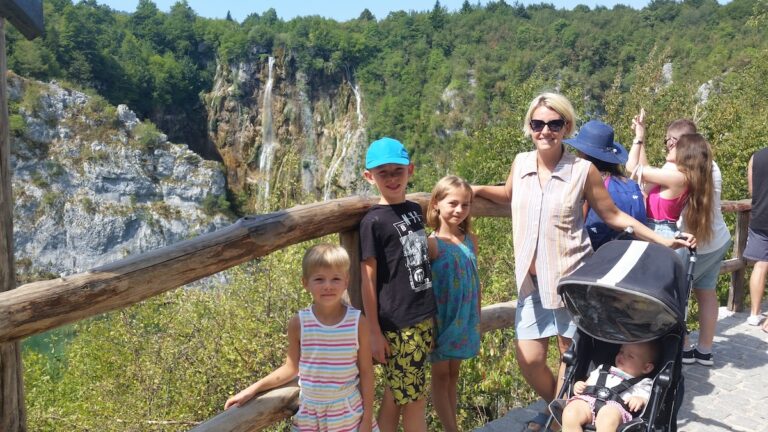
But water was the biggest hit: the pool at Camping Legjenda in Shkoder, the hot springs in the Langarica river canyon, waves splashing against the rocks in Ksamil and the little artificial island at the Pa Emer campsite. At the Kravica Waterfalls the water was maybe 16 degrees, and the kids still did not want to get out. In Krka National Park you could still swim by the waterfalls back then (it has been banned since 2021).
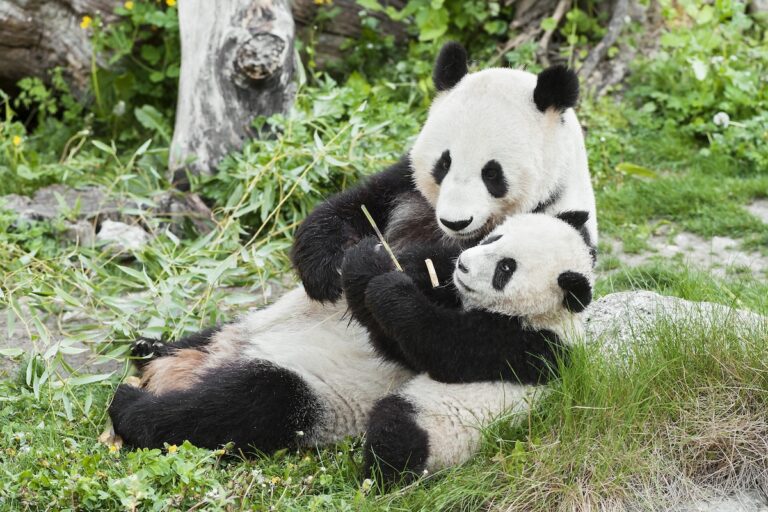
At Camp Zagreb the kids asked about the kayaks straight away, and at the end of the trip we finally saw the giant pandas at the Vienna Zoo, which one of our daughters had dreamed of for a long time.
Detailed plan
Day 1 - July 28
- Balkan road trip 2017 ahead of us - packing and getting ready
Day 2 - July 29
- Fairy Tales Garden, Miedzygorze - a stop in the Polish mountains
Day 3 - July 30
- Szigliget Castle, Hungary - castle ruins with a view over Lake Balaton
Day 4 - July 31
- Jajce - Bosnia and Herzegovina, a waterfall in the town center and old mills
Day 5 - August 1
- Sarajevo - the capital of Bosnia, history and contrasts
Day 6 - August 2
- To Albania through Montenegro - driving through the mountains, first taste of Albania
Day 7 - August 3
- Rodonit peninsula - castle ruins on the Adriatic coast
Day 8 - August 4
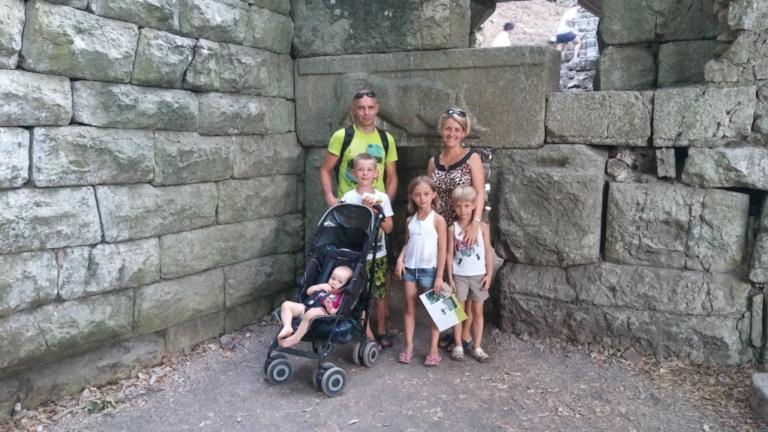
- Amphitheater and archaeological museum in Durres - Roman amphitheater and ancient finds
- Wild camp on the beach in Albania - camping right on the shore
Day 9 - August 5
- Berat - the city of a thousand windows, castle and old town
Day 11 - August 7
- Hot springs in the Langarica river canyon - bathing in natural hot springs
- Gjirokaster - the stone city and a castle with valley views
Day 12 - August 8
- Blue Eye / Syri i Kalter - a mesmerizing karst spring
- Ksamil - turquoise beaches of the Albanian riviera
Day 13 - August 9
- Butrint - ancient ruins on the UNESCO list
- Llogara pass - a scenic drive along the coast
Day 14 - August 10
- Kavaja, Pa Emer camping - rest by the sea
Day 16 - August 12
- Niegosz Mausoleum, Lovcen Pass and Kotor - Montenegro, a mountain road and the Bay of Kotor
Day 17 - August 13
- Kravica Waterfalls - cooling off in the heart of scorching Bosnia
Day 18 - August 14
- Trogir - a UNESCO old town and an unexpected reunion
Day 19 - August 15
- Krka National Park - waterfalls and boardwalks
Day 20 - August 16
- Plitvice Lakes - the turquoise jewel of Croatia
Day 21 - August 17
- Camp Zagreb - kayaking on an artificial lake
Day 24 - August 20
- Vienna with Kids: Giant Pandas at the Zoo - the Vienna Zoo and the long road home
Practical info
We checked rules, charges and prices in November 2026.
Borders and documents
Polish citizens can enter Bosnia and Herzegovina, Montenegro and Albania with a passport or a national ID card:
- in 2017 Croatia was not yet in the Schengen area, so documents were also checked at the Hungarian-Croatian border. Croatia joined Schengen on 1 January 2023, and these checks are gone,
- the borders of these countries with Croatia are external Schengen borders, so keep your documents at hand,
- EU citizens are not registered in the new Entry/Exit System (EES),
- in Bosnia and Herzegovina you can stay without a visa for up to 90 days within 6 months.
If only one parent travels
Polish rules require the other parent's consent even for a short trip abroad with a child. There is no official form, but it is a good idea to have it in writing.
Car insurance
- in Albania a car registered in Poland needs a Green Card, which you get from your motor insurer,
- Bosnia and Herzegovina and Montenegro are in the same group as EU countries, so a Polish third-party policy is enough there.
Currencies
- Czech Republic: koruna (CZK),
- Hungary: forint (HUF),
- Bosnia and Herzegovina: convertible mark (KM),
- Albania: lek (ALL),
- Croatia (since 2023), Austria and Montenegro: euro.
Today at motorway toll booths in Bosnia you can pay in euros or marks.
Vignettes and tolls
Road charges along the route today:
- Czech Republic: a 10-day e-vignette costs 300 CZK (in 2017 the vignette was still a windscreen sticker, the e-vignette came in 2021),
- Hungary: a 10-day e-matrica 6,900 HUF,
- Austria: a 10-day digital vignette 12.80 EUR (bought online, it can be valid straight away). In summer 2017 there was only the sticker, the digital vignette went on sale in November 2017,
- Croatia and Bosnia: you pay for motorway sections at toll booths, and Croatia plans to switch to a system without booths on 1 March 2027,
- Montenegro: the Sozina tunnel costs 2.50 EUR.
Safety
- in Albania the Polish authorities advise against driving after dark because of potholes and animals on the roads,
- in Bosnia and Herzegovina do not wander off the roadside into the woods when you stop, because of landmines, especially where you see 'PAZI MINE' signs.
Campsites
When we travelled in 2017, free pitches at Lake Balaton and on the Croatian coast were hard to find in August, and in the Czech Republic an email booking saved us.
Wild camping is forbidden in Croatia: you can only pitch a tent at a registered campsite.
More from our trips
Watch the videos from our trips on YouTube and see photos from the road on Instagram.