Route from Poland to Denmark
We spent the first week of the holidays at the Polish seaside, so our journey began in Pomerania.
Poland and Denmark do not share a land border. Denmark's only land border is with Germany, so by car you drive through Germany, while across the Baltic Sea the two countries are neighbours (they agreed on their sea border south of Bornholm in 2018). From Szczecin to the Danish border at Kruså it is about 520 km, mostly on the A20 and A7 motorways, so roughly 5 hours without traffic, and about 640 km to Billund. The other option is a Scandlines ferry: Rostock - Gedser takes about 2 hours and Puttgarden - Rødby 45 minutes.

Journey to Denmark
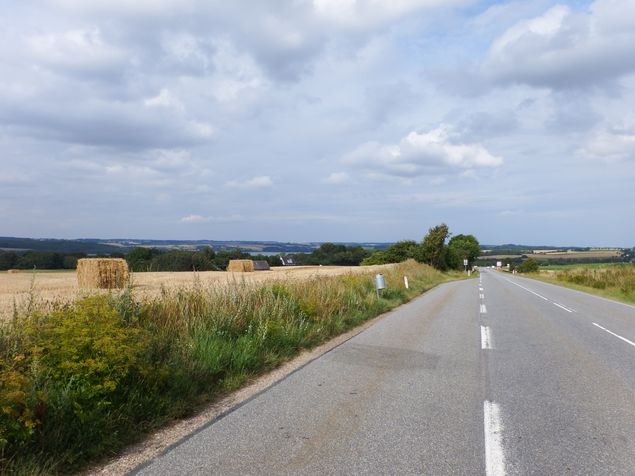
We started our journey on Saturday morning. The first part was on Polish national road No. 6 up to the border crossing in Kołbaskowo. This is mostly a narrow road, one lane in each direction.
Before leaving the country we stopped for breakfast at McDonald's in Goleniów, then quickly crossed the border. The rest of the way, as planned, was German highway No. 20 to Lübeck, and then No. 7 to Flensburg.
There were no surprises until we arrived in Schleswig. We hit a traffic jam on the highway. We noticed that there was a big music festival nearby and the highway capacity seemed to be too limited. According to the radio, it was 30 km long, which meant several hours in the traffic jam. After a quick analysis of the situation we decided to detour using local roads to avoid waiting.

That's how the detour extended our trip from the originally planned nine hours to over 11. We drove through Kiel and Eckernförde. Along the way we came across the historic Lindaunisbrücke drawbridge.
Good to know: the Lindaunisbrücke over the Schlei inlet opened in 1927. When we were here in 2014, cars and trains still used it. It has been closed since 2020, and pedestrians cross the inlet on a temporary footbridge. A new crossing is being built next to it, and trains and cars should be able to use it at the end of 2027. If you plan a detour this way, check the current situation first.
From Flensburg we crossed the Danish border at Kupfermühle-Kruså and continued on highway E45 to Kolding.
We planned to stay overnight at a campsite located near Billund, in Randbøl. From Kolding we traveled the shortest route on local roads to our destination.
We arrived after almost 14 hours spent on the road. How did we cope with the trip? Very well. It boded well for the next days of our holiday road trip. We summed up the whole trip in Our summer holidays in Denmark.
Practical information
We checked road tolls and ferry check-in rules in November 2026.
How long it takes
We planned 9 hours from Pomerania to Randbøl near Billund, but the traffic jam near Schleswig and the detour made it almost 14 hours (when we went in 2014). On summer Saturdays it is worth allowing extra time.
Road tolls
Cars do not pay to use German motorways. Denmark has no vignette either; only the Great Belt and Øresund bridges are tolled, and you do not cross them on the way to Jutland.
Ferries
Scandlines sails these routes:
- Rostock - Gedser: about 52 km, about 2 hours,
- Puttgarden - Rødby: about 20 km, 45 minutes.
You need to check in at least 15 minutes before departure. We took the ferry on the way back, which we describe in Taking ferry to Germany and route to Poland.
The speed limit
Poland
- urban: 50 km/h
- rural: 90 km/h
- expressways 100-120 km/h (depending on the number of lanes)
- highway 140 km/h
Germany
- urban: 50 km/h
- rural: 100 km/h
- highway: no general limit (recommended speed 130 km/h)
Denmark
- urban: 50 km/h
- rural: 80 km/h
- highway: 110-130 km/h
More from our trips
Watch the videos from our trips on YouTube and see photos from the road on Instagram.