Norwegian Museum of Cultural History
After a visit to the Viking Ship Museum we headed north along the main street, and after a few minutes of walking we reached the Norwegian Museum of Cultural History. It is an open-air museum with 155 buildings from the period 1600-1970. Historic buildings were moved here from Norwegian towns and villages. There are also a few older buildings, like the historic Gol Stave Church from 1212.
Fun fact: the museum was founded in 1894 by Hans Aall, but King Oscar II had started a collection on Bygdøy even earlier. Its five relocated buildings, opened to visitors in 1881, are seen as the world's first open-air museum. The Gol church was taken apart in 1884 and moved to Bygdøy, and the king paid for the move.

The buildings are grouped into regions, and paths run between them. Each building is described so we could read what it was used for. There are both houses and farm buildings. Some of these places seem to still be alive - in a bakery, for example, bread was baked. Most of the huts could be accessed, or at least we could look through the window or door.

For kids who might get bored after a while of walking, there is a playground.

You should visit this place in good weather - all the exhibits are outdoors. Regular tickets cost NOK 120 for an adult; children aged 6 and over enter for NOK 40, younger ones free.
See our video of the museum visit:
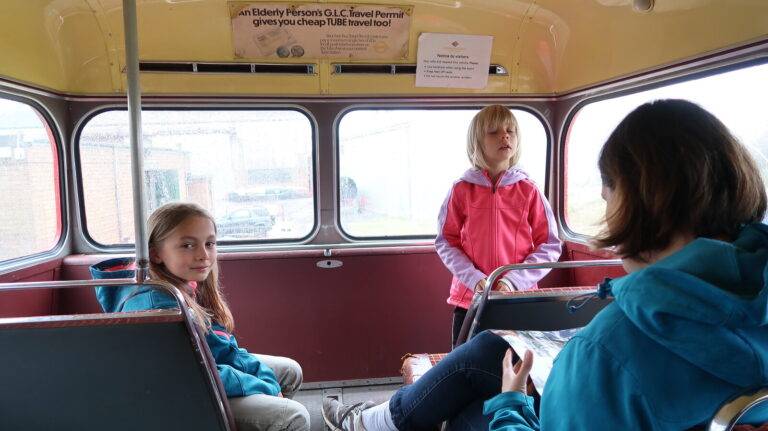
In front of the museum entrance is a bus stop. We could take a bus to get to the main harbor of the peninsula - Bygdøynes. The next museums awaited us there.
More from our trips
Watch the videos from our trips on YouTube and see photos from the road on Instagram.