Stonehenge with kids in the rain - how the visit works
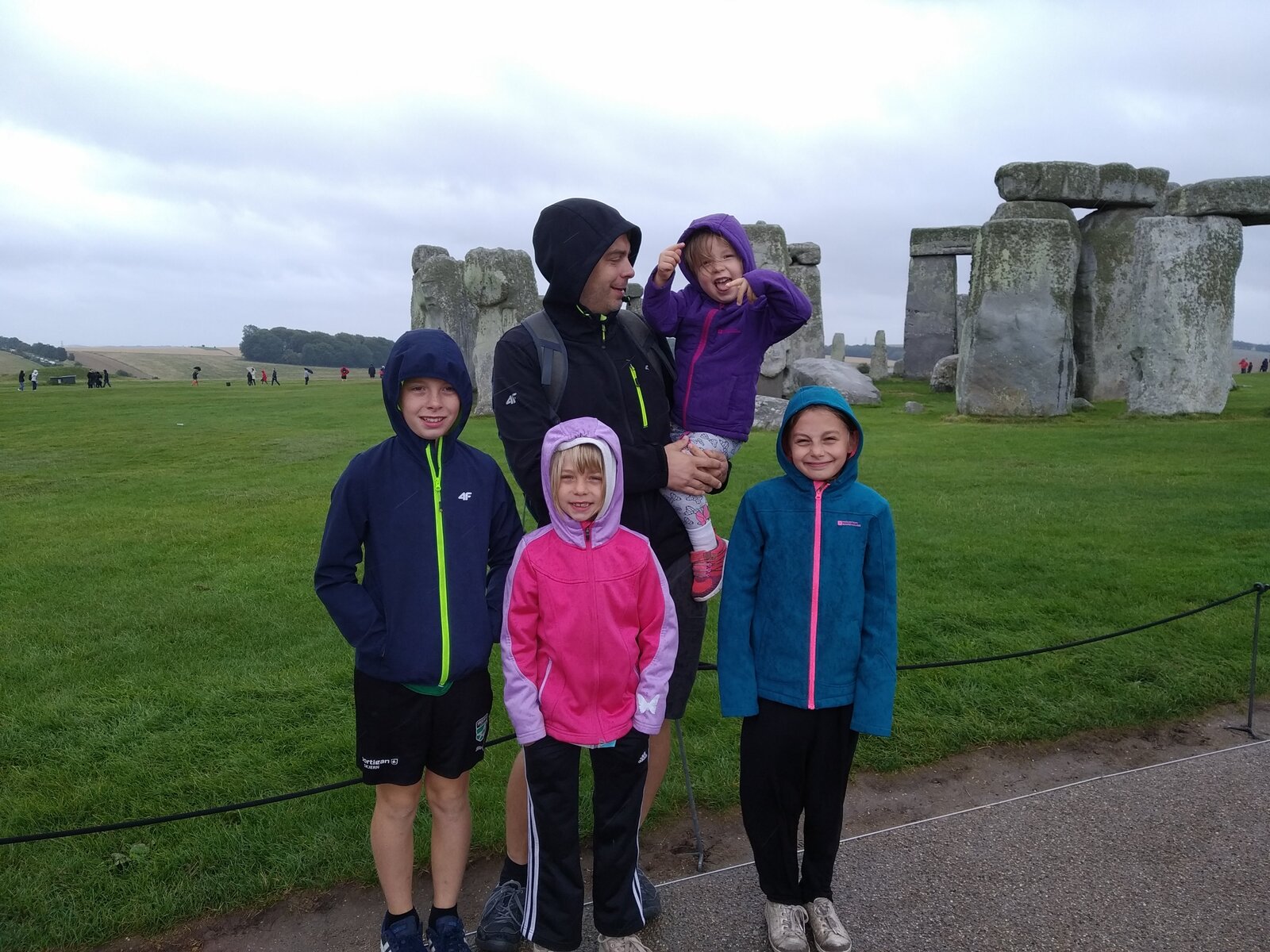
What is it like to visit Stonehenge with kids? You leave the car at the visitor centre, about 2 km from the stones, and a free bus takes you to the circle. The bus runs every few minutes and the ride takes 5-10 minutes. You cannot walk among the stones: the path goes around the circle, a few metres away from it. This is how our rainy Friday, 16 August 2019, looked.
The day before we visited Windsor Castle, and we spent three nights at a campsite in Chertsey near London. The plan of the whole trip is in our post UK road trip with kids.
From London to the west
In the morning we packed up our tent and headed towards Cornwall. Stonehenge was 122 km away, about 2 hours by car. Since we left the ferry in Dover, the weather had been mostly rainy, with some sunny spells. That day there were no sunny spells at all. It rained the whole time.
The visitor centre and the bus to the stones
We had not checked before how the visit works, so it surprised us a little. You cannot see the stones from the car park. First you go to the visitor centre and buy a ticket, and then you take a bus along a country road to the circle. The kids loved the bus ride.
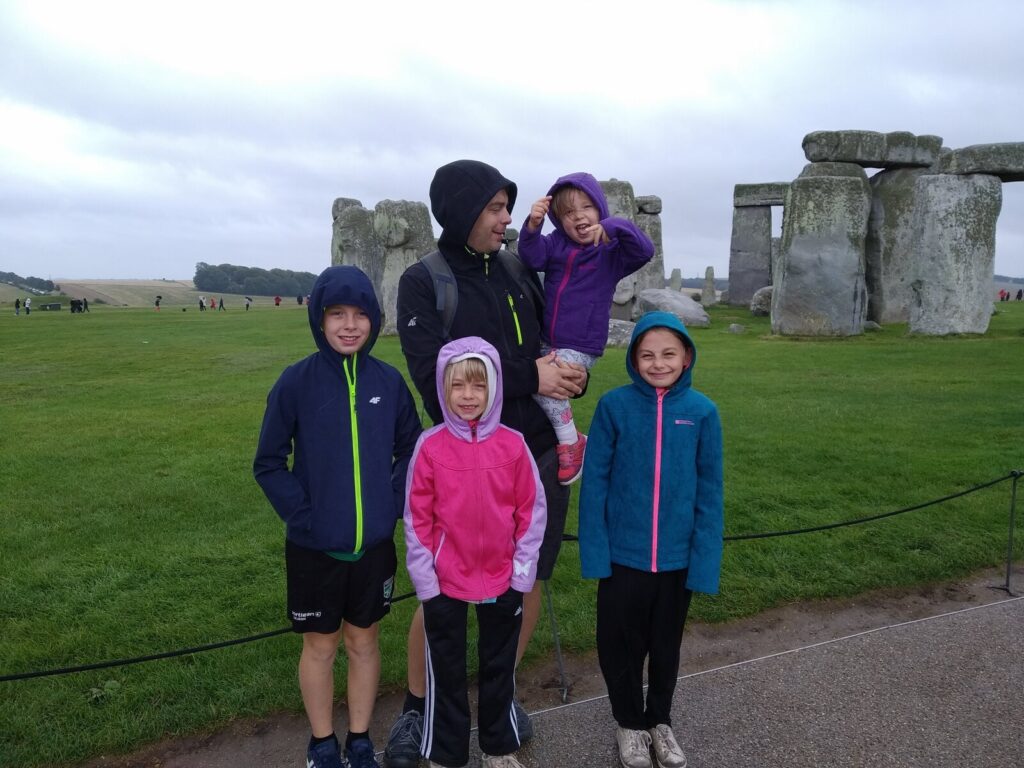
Stonehenge up close
At the stones we put our hoods up and walked around the circle on the path. Along the path there are boards that show how the circle looked in the past and how it looks today. The kids immediately asked if the stones could fall over. They can, and some of them have been lying on the ground for a long time.
The picture from the postcards met reality, and we were a little disappointed. The rain did not help. On the other hand, driving past and not stopping? We would have regretted it.
Stone Age houses and a stone to pull
The kids had the most fun back at the visitor centre. There are several reconstructed Neolithic houses with thatched roofs and clay walls. You can look inside some of them. The kids checked if a roof like that keeps the rain out. It does, it was dry inside.
Next to the houses there is a huge stone on a wooden sledge, with a rope to pull. Everyone can try to move it. We all pulled together and joked that we needed about 95 more people to help.
Inside the visitor centre there are bronze models of the circle that you can touch. The kids felt every stone and compared the model with what they had just seen in the field.
Stonehenge history in short
Stonehenge is about 5,000 years old. First, around 3000 BC, people made a round bank and ditch. The big stones were put up around 2500 BC.
- The large stones, called sarsens, came from the Marlborough Downs, about 30 km to the north.
- The smaller "bluestones" came all the way from the Preseli Hills in Wales.
- The circle is lined up with the sunrise on the summer solstice.
Fun fact
Nobody knows for sure how Stone Age people moved such heavy stones. The stone on the sledge at the visitor centre shows one of the ideas: hundreds of people pulling it on wooden runners.
Further west, to Dawlish
From Stonehenge we had another 155 km, over 2 hours, to Lady's Mile campsite in Dawlish, Devon. You can read more about this campsite and our rainy drive to the south-west in the next post: Lady's Mile in Dawlish - camping in the rain.
Practical info
We checked the ticket rules in November 2026.
- Getting there: Stonehenge is on the A303 near Amesbury in Wiltshire. From Chertsey near London it took us about 2 hours.
- Tickets: buy online by midnight the day before your visit, it is cheaper (up to 15% off). The ticket is valid all day. English Heritage and National Trust (England) members get in free.
- The bus to the stones is included in the ticket and takes 5-10 minutes. You can also walk on a marked route through the fields.
- Toilets and the café are only at the visitor centre, not at the stones.
- Without a ticket: you can see the stones from public paths near the circle, but from further away.
- Weather: the circle looks less impressive in the rain, so choose a dry day if you can.
More from our trips
Watch the videos from our trips on YouTube and see photos from the road on Instagram.