
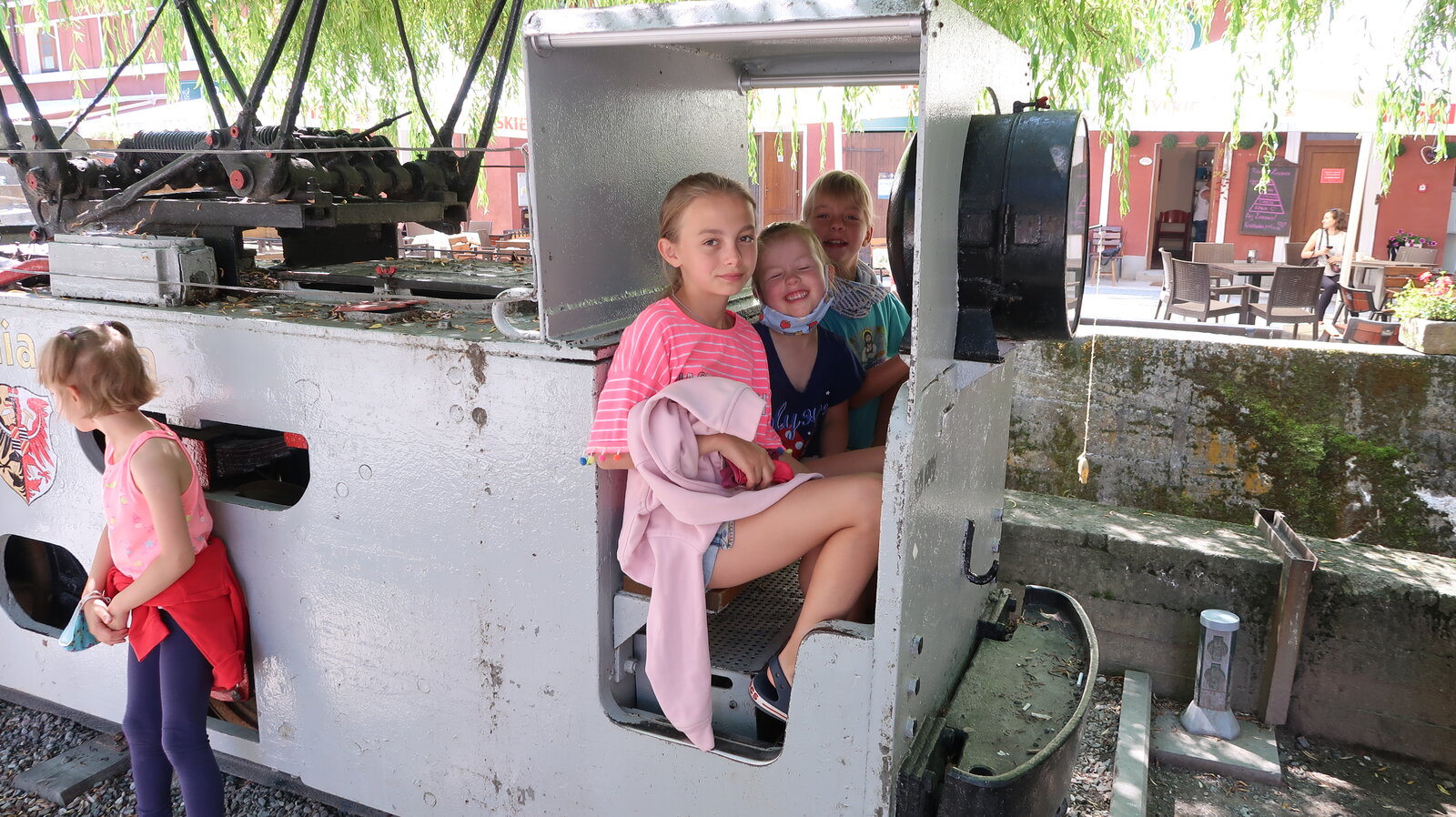
Zloty Stok Gold Mine with kids - gold, arsenic and our own ducat
Is the Gold Mine in Zloty Stok good for kids? Definitely. The guided tour takes about 1.5 hours, it is 6-7°C inside all year round, and on the way you get a ride on a mine train, the only underground waterfall in Poland and gold bars. We spent the whole morning here, and we also looked at the medieval mining settlement.
It was our last day in the Klodzko Valley, after Szczeliniec Wielki and Bledne Skaly. The plan of the whole 2020 holiday is in the post Summer holidays in Poland with kids 2020.
From Radkow to Zloty Stok
On Saturday 8 August we packed the tent in Radkow and drove through Klodzko (24 km) to Zloty Stok (another 17 km). It was 2020, so everyone in the mine wore masks or scarves over their faces, the kids too.
Underground: gold and arsenic
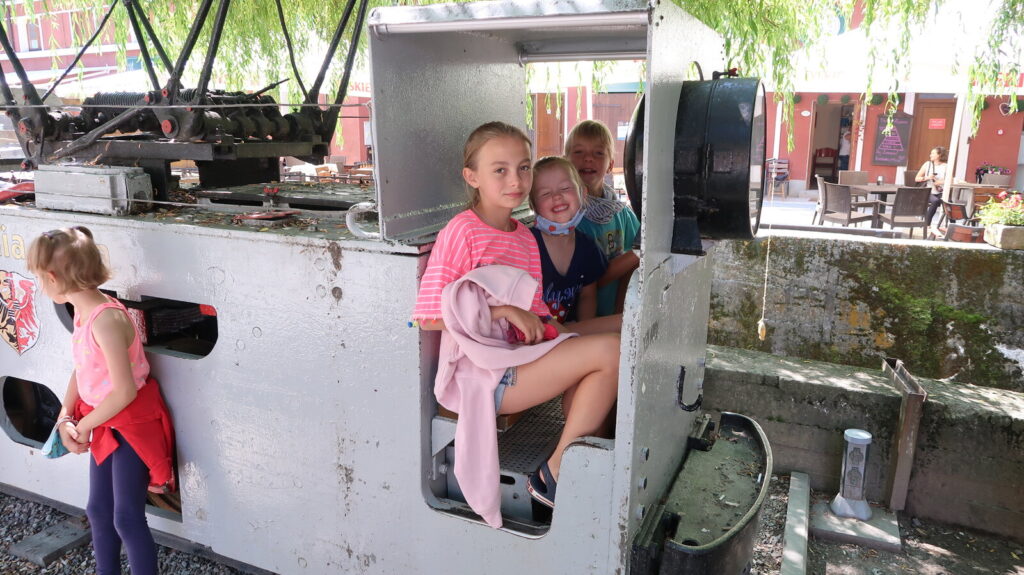
The guide started with a model that showed what mining here looked like. It soon turned out that Zloty Stok was famous not only for gold. From the 18th century arsenic, a poison, was produced here, and the guide told us that Zloty Stok was once the biggest centre of its production in the world. Arsenic was used, among other things, to kill rats, to tan leather and to protect wood, and today it is used in electronics.
What surprised us most was how much work gold took. In the best years the mine produced about half a kilogram of gold a day. The guide showed us a bar of that size carved from wood and said he made it out of boredom during quarantine. About 600 miners worked for such a bar.
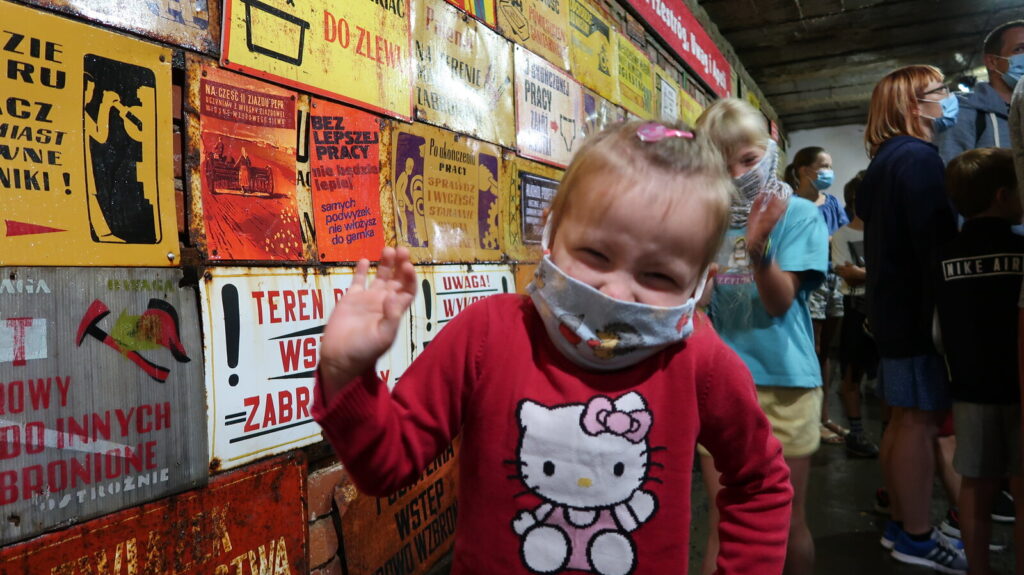
On the way there were boards with old work safety rules, adits, an inclined shaft with stairs and a ride on the mine train. At the end, gold bars glittered in a display case.
Striking our own ducat
In the mint workshop the guide showed how coins used to be struck. The minter held the die in his hand and hit it with a hammer. We used a press for that, and the kids stepped back two steps before it came down. On our ducat there is the coat of arms of Zloty Stok on one side and Saint Christopher on the other, just like on the original.
The medieval mining settlement
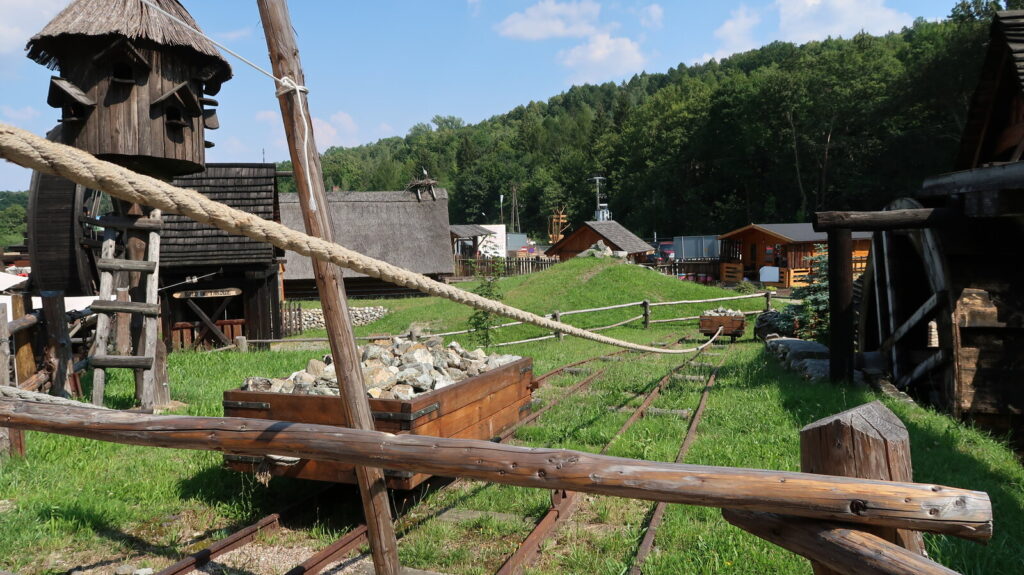
After the mine we went to the medieval settlement. There is a forge, a trough for panning gold and a well. The guide drew a bucket of water from it and let the kids check how cold it is, because the water is about 4°C all year round. Next to it stands a horse gin, a big wooden wheel that horses used to turn. At the end the kids rested on a tree stump, and we looked at the settlement from above.
Fun fact
In the Gertruda Adit in Zloty Stok there is an underground waterfall about 10 m high. According to the mine, it is the only waterfall like this in Poland.
On to Silesia
In the afternoon we drove 140 km to Camp9 campsite in Tarnowskie Gory, where we stayed for two nights. The next day we had the Gliwice Radio Tower and a boat trip underground: Black Trout Adit with kids. We described another gold mine, in Kremnica in Slovakia, in the post Gold Mine in Kremnica.
Practical info
We checked in November 2026.
- Tickets: the underground route costs 58 PLN for adults and 48 PLN reduced, and children up to 4 years old go in free. The ticket also includes the Mineral Museum. The medieval mining settlement has a separate ticket.
- Time: a guided tour takes about 1.5 hours, with entries every 45 minutes.
- Clothing: it is 6-7°C in the mine, so even on a hot day bring sweatshirts.
- Underground boat trip: a separate attraction, 200 m, booking by phone at least a day in advance.
- Pushchair: there are stairs and narrow passages on the route.
More from our trips
Watch the videos from our trips on YouTube and see photos from the road on Instagram.